The Karangahake Gorge Loop is a trail that blends New Zealand history, adventure, and natural beauty in the Waikato region.
This 17 km loop winds through dramatic river gorges, abandoned gold mining tunnels, and lush bush, offering a journey back to the gold rush era while delivering stunning views of the Ohinemuri River. It’s also the perfect stop for those traveling from Auckland to Tauranga.
Whether you’re a history buff, a nature lover, or just seeking an immersive day hike, this trail’s mix of suspension bridges, dark rail tunnels, and fern-filled forests makes it an unmissable adventure.
This post may contain affiliate links. Your purchase through these links supports me with a commission, at no added expense to you.
KEY TAKEAWAYS
- A comprehensive guide to the Karangahake Gorge Loop. Covering everything from trail details and logistics to photography tips and nearby explorations in this historic New Zealand gorge.
- If you’re exploring the North Island’s hidden gems, this hike combines easy access to thrilling underground tunnels, scenic river walks, and gold mining heritage. Perfect for a memorable day out without straying far from major routes.
- Practical advice on getting there, best times to visit, safety for solo trips, capturing epic photos, and accommodation options in case you’d like to extend your adventure in the Waikato area.
KARANGAHAKE GORGE LOOP LOCATION
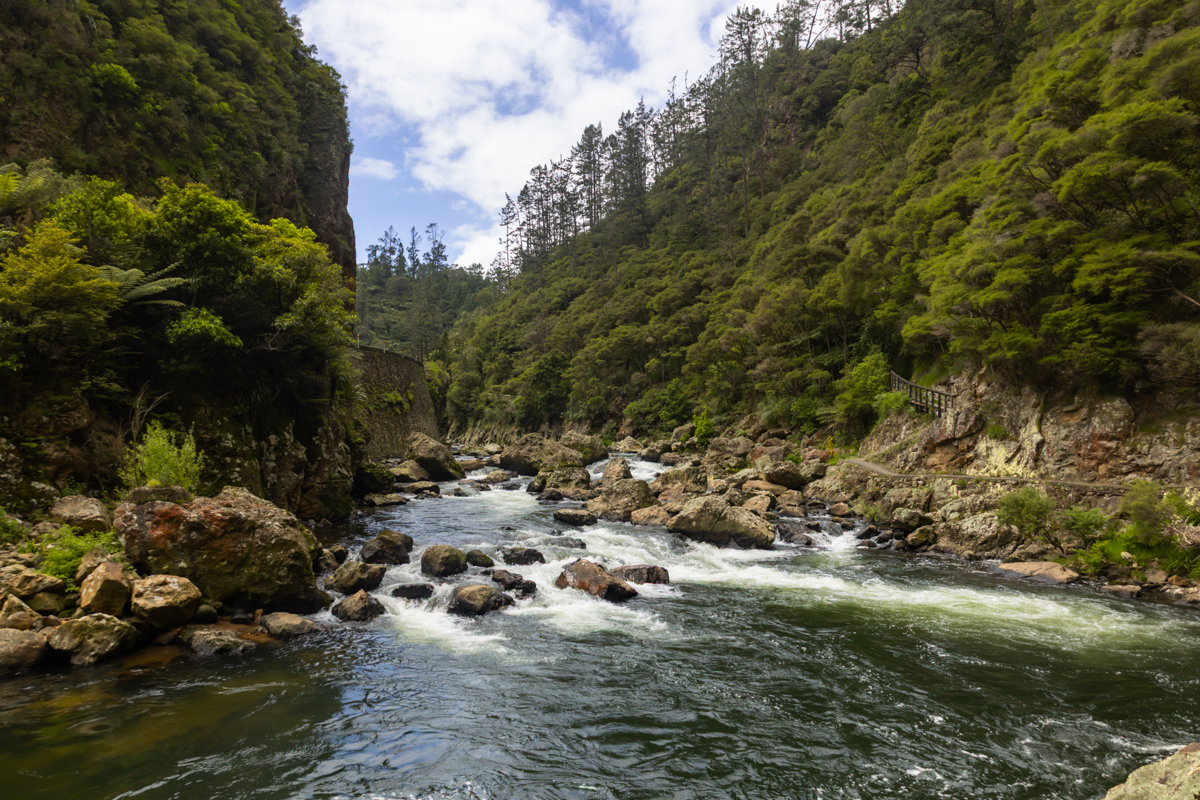
The Karangahake Gorge Loop is located in the Karangahake Gorge Scenic Reserve, nestled between the Coromandel and Bay of Plenty regions in New Zealand’s North Island.
It’s roughly 90 minutes from Auckland or 45 minutes from Tauranga, alongside State Highway 2 in the Waikato district.
The gorge itself is a narrow, steep-sided valley carved by the Ohinemuri River, framed by rugged hills and remnants of the old mining town.
HOW TO GET TO THE KARANGAHAKE GORGE
Reaching the trailhead of the Karangahake Gorge Loop is straightforward, especially if you’re road-tripping the North Island.
The primary access is via State Highway 2 (SH2). This is the main route that connects Auckland to Rotorua and the Bay of Plenty. From Auckland, head south on SH2. Once you’re off the motorway it’s a scenic drive through rolling farmland. Coming from Tauranga, it’s an even quicker trip, being only 50 km north, following the same SH2.
Public transport options are limited, especially for a longer stop so a having a car is essential.
Parking tips
There are many carparks available along Karangahake Gorge but where you park really depends on what you’d like to see.
If your primary objective is to do the Karangahake Gorge Loop, park at the Karangahake Hall. There’s space for roughly 20-30 vehicles. When I arrived mid-afternoon on a Sunday, it was still pretty busy but I found a park easily enough.

KEY INSIGHTS FOR HIKING KARANGAHAKE GORGE LOOP
Distance: 17 km | 10 miles
Elevation: 830 meters
Duration: 4-5 hours
Difficulty: Easy
Trail Type: Loop
Open: Year-round
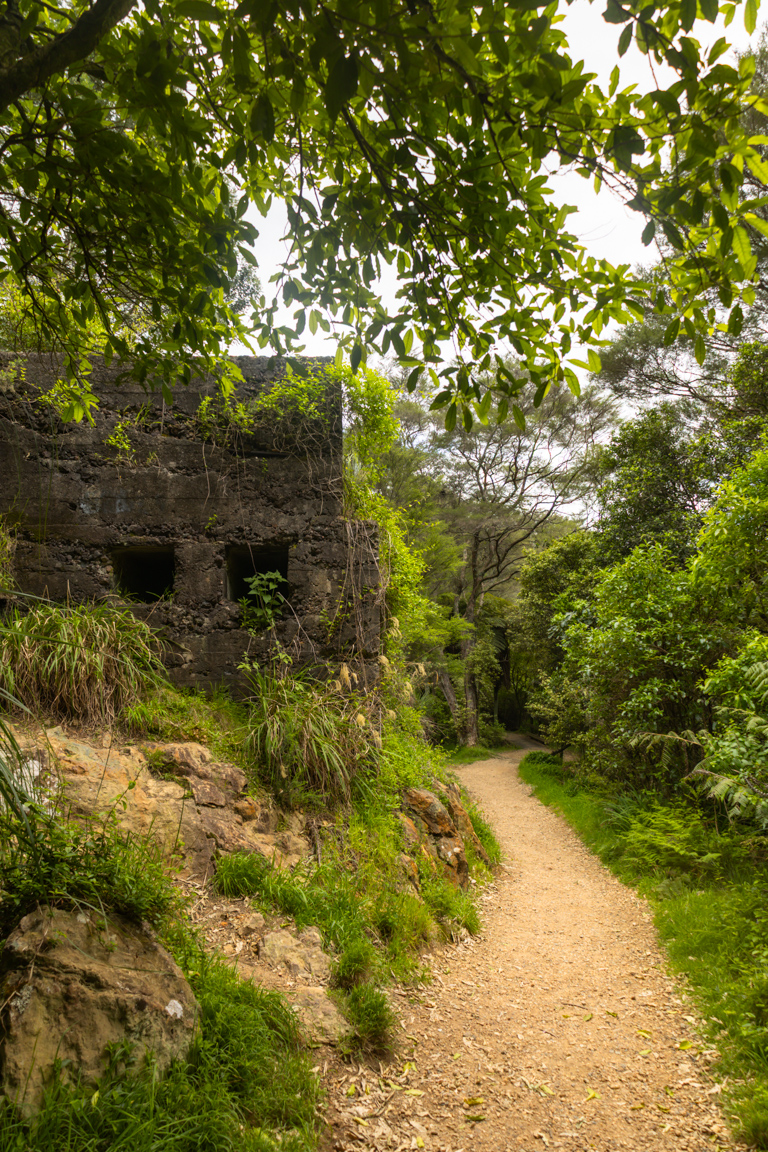
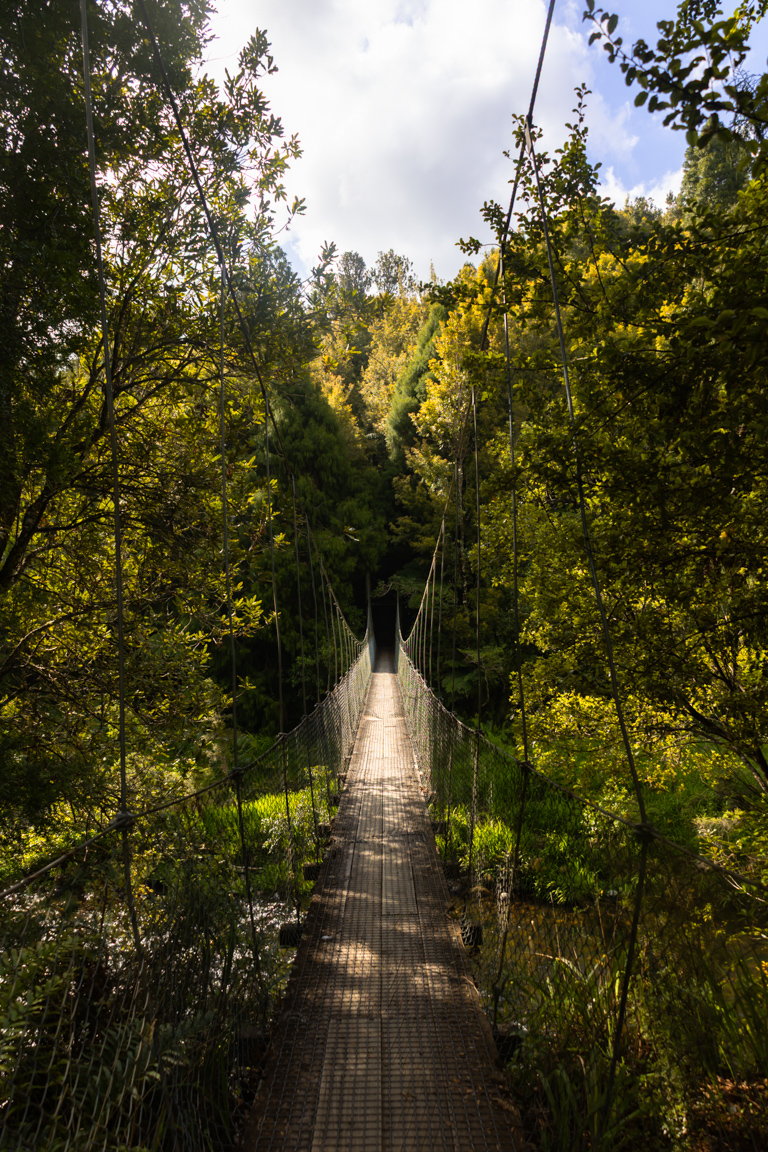
The Karangahake Gorge Loop trail is broken into four key sections: the Karangahake Gorge Historic Walkway (an overlap of the Hauraki Rail Trail), the roadside link, the Waitewheta Pipeline Track (beautiful stretch alongside the Waitawheta River with bridges and bush trail), and finally the famous Windows Walk (where you’ll wander through old mining tunnels with carved “windows” overlooking the river). Navigation is easy thanks to clear signage. The terrain is also mostly gravel and boardwalk, with the odd staircase or tree root to step over.
Once you get moving, just be aware that part of the loop does take you briefly onto rural roads. I had a couple of people ask if I was lost, which is fair but rest assured, it’s still part of the official route connecting the Historic Walkway to the Pipeline Track. It may not be the most thrilling section, but the rest of the trail makes up for it.
Speaking of memorable moments, there are two pitch-black tunnels, one along the Pipeline Track and the other on Windows Walk. You’ll need a headlamp or at minimum your phone torch to get through safely. If you’re hiking solo and your imagination tends to misbehave, prepare yourself. Let’s just say I would’ve ideally had someone with me in these parts.
As you walk, you’ll pass remnants from the gold-mining era, including rusting structures swallowed by moss and bush. Native tūī and fantails often tag along, and the sound of the river becomes a constant backdrop. Expect swing bridges, damp tunnel air, and the occasional slippery patch Thankfully, the elevation gain is minimal and spread across the entire trail, with most of the uphill happening along the roadside.
OTHER POSTS YOU MIGHT LIKE
BEST TIME TO VISIT
Sunrise or late afternoon is a great time for golden light plus, you’ll dodge the midday heat. In peak summer (December-February), aim for off-peak hours to enjoy the trail and swimming holes without the crowds.
Seasonally, spring (September-November) brings green flora and fauna and waterfalls at their gushiest, while autumn (March-May) offers crisp air and fewer mozzies. I hiked in mid-October, and this was the perfect time to avoid crowds and the heat. Avoid heavy winter rains (June-August) as it can make parts of the track quite slippery.


HOW CROWDED IS IT AT KARANGAHAKE GORGE
Karangahake Gorge is one of the North Island’s most accessible historic areas, so it’s no surprise it draws a crowd, especially on weekends.
That said, the full loop has a funny rhythm to it. Some stretches feel busy and social, while others are surprisingly quiet and almost eerie. On the Hauraki Rail Trail section, you’ll likely share the path with cyclists cruising through, families out for a wander, and other hikers making their way along the gorge.
Once you transition onto the Pipeline Track, things change. The noise drops, the crowd thins, and it becomes much more peaceful. It’s not an unpopular walk, just a less travelled one, so you’ll get a moment or two where it feels like you’ve got the place to yourself.
IS IT SAFE TO TRAVEL SOLO
Absolutely, the Karangahake Gorge Loop is solo-hiker friendly. It has well-maintained tracks, clear signage, and steady foot traffic, making it low-risk. I did this hike alone and felt completely safe. Just make sure you bring a torch and with wet rocks, good shoes are key. There are no wildlife threats, but make sure to inform a friend or family member of your plans, carry water, and check the DOC weather app for risks.
If you’re unsure of the direct route of the trail (especially when on the road section of the hike), make sure to have the track downloaded on AllTrails for ease. This definitely helped reassure me that I was going in the right direction.
OTHER PINS YOU MIGHT LIKE
ACCOMMODATION AT KARANGAHAKE GORGE
If you want to stretch your visit beyond a single day, there are plenty of accommodation options nearby. It’s also a great area to break up a longer road trip if you’re passing through and need somewhere relaxing to reset.
The Falls Retreat is one of the most well-known stays in the area, and it’s popular for a reason. The food alone is worth stopping for. If you’re after something a little more secluded and romantic, the Ruru Purepod in Waikino is a stunning pick and only about a 10 minute drive from the trailhead.
Families or anyone needing extra space will find plenty of practical choices on Booking.com, ranging from simple cottages to comfortable holiday homes.
CAN YOU CAMP AT KARANGAHAKE GORGE
Dickey Flat is a DOC campsite is located beside the Waitawheta River, and it sits alongside the Karangahake Gorge Loop trail. It’s a popular option for anyone wanting to experience the area at a slower pace.
The campsite itself is basic but scenic, with flat grassy areas, river access, and enough space that you’re not shoulder-to-shoulder with your neighbours. Facilities are standard DOC style so arrive prepared and bring everything you need, including rubbish bags, as it’s pack-in, pack-out.
If you’re hoping to hike the loop early in the morning, swim in the river, or just enjoy a quiet evening under the stars, camping here is a great way to extend the adventure. Just keep in mind that it can fill up during summer and long weekends, so it’s worth checking availability or arriving early if you’re travelling during peak season.


PHOTOGRAPHING THE KARANGAHAKE GORGE LOOP
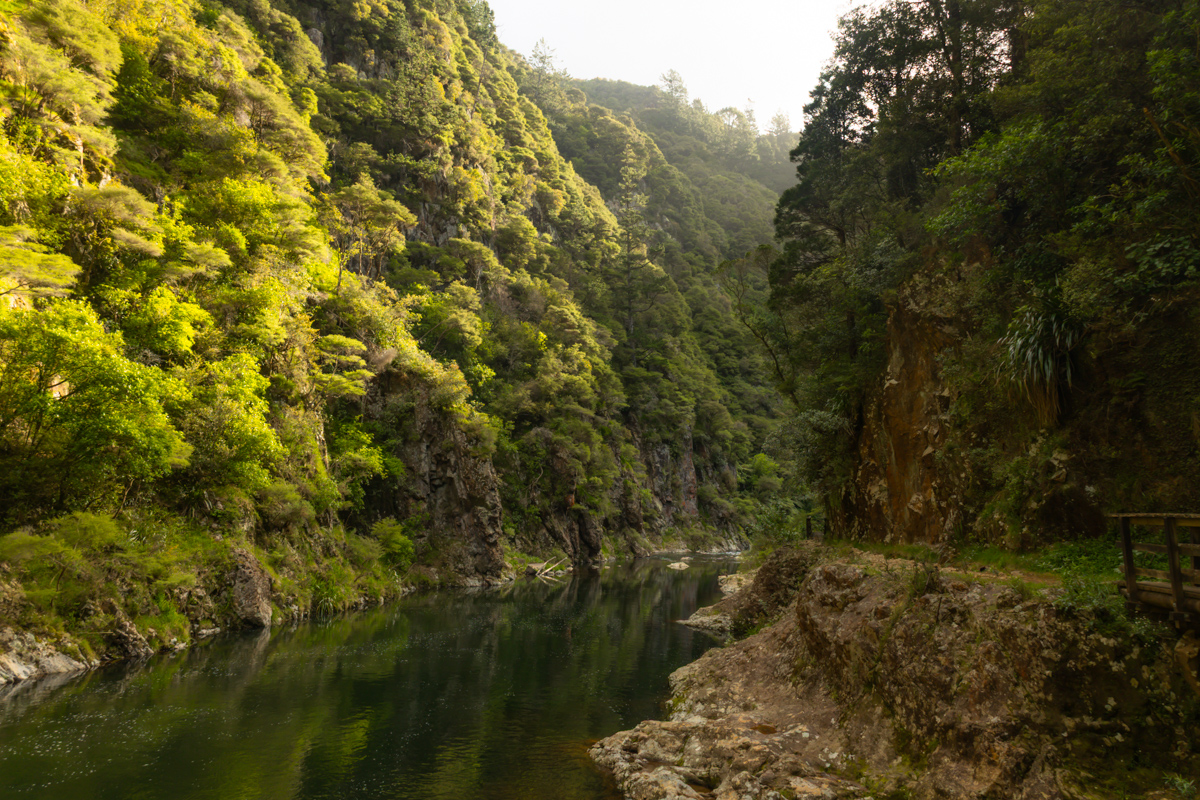
The Karangahake Gorge Loop has contrasting landscapes, from shadowy tunnels to bright river gorges. Make sure to shoot in RAW and keep your settings updated as you move through different environments.
For those silky water effects on the river, try longer exposures with a tripod. I did this at the Owharoa Falls and I’m pretty happy with the results.
Here are some quick gear tips, if you’re undecided on what to bring:
Camera: I swear by the Canon EOS R6 Mirrorless Camera. This camera is my constant companion on all of my trips, and has captured the images included in this post.
A sturdy lens for all photography types: My camera has a 24-105mm, perfect for landscapes.
Tripod: This Peak Design Carbon Fibre Tripod is lightweight and rock-solid for river long-exposures.
ND Filter: Essential for daytime shots without hiking your ISO.
CONCLUSION
In this post, we’ve unpacked the Karangahake Gorge Loop from logistics and trail stats to solo safety. Whether you’re chasing mining history in torchlit tunnels, a day out in nature, or a wanting to explore the Gorge, this loop packs North Island magic into a half day hit.
Looking for more epic hikes? Explore our New Zealand travel guides or continue to all of my worldwide destination guides.
FAQs
How long does it take to walk the Karangahake Gorge Loop?
The full 17 km Karangahake Gorge Loop takes most people 4–5 hours at a relaxed pace, including stops for photos and exploring the tunnels.
Is it safe to swim in Karangahake Gorge?
Yes, swimming is popular in the Ohinemuri River and nearby swimming holes, especially in summer. The water is generally calm and refreshing, but always check for strong currents after rain, supervise children, and avoid jumping from heights.
Is Karangahake Gorge worth visiting?
Absolutely! It’s one of the North Island’s best half-day adventures. It combines dramatic river gorges, historic gold-mining tunnels, suspension bridges, and lush native bush. It has easy access from Auckland or Tauranga, free entry, and a perfect mix of history, nature, and light adventure make it highly worthwhile.
Are dogs allowed on the Karangahake Gorge Loop?
Yes, dogs are permitted on leash along most sections, including the Historic Walkway and parts of the Hauraki Rail Trail. However, they’re not allowed on the Windows Walk. Make sure to keep them close in tunnels and near water.
Is the trail suitable for families with young children or prams?
For families walking with young children, most of the loop is suitable with well-maintained paths and mostly easy terrain but the full trail may feel long for little legs. If you’re hiking with kids, tackling shorter sections rather than committing to the entire loop is usually the better approach.
However, if you’re thinking of bringing a pram, it gets a bit tricky. The only section where a pram might work is the Karangahake Gorge Historic Walkway, and even then, it’s not ideal. You’ll be sharing the path with cyclists and navigating narrow bridges, which can get awkward fast.
What gear should I bring for the hike?
Pack a headlamp for dark tunnels, sturdy shoes for slippery spots, and 2L of water pp, sun protection, and snacks. In summer, add swimwear for river dips; check DOC alerts for weather-related closures.
Are there any current closures or seasonal restrictions?
As of December 2025, the full Loop is open, but Crown Tramway is closed (an alternative to Windows Walk). Make sure to check the DOC website for alerts and most recent weather updates.
Can you cycle the Karangahake Gorge Loop instead of hiking?
No. However there are parts of the Loop that overlap the Hauraki Rail Trail, making it bike-friendly (easy grade, shared path). The Hauraki Rail Trail is a 197km route that runs from Kaiaua to Matamata.
Top Travel Resources to Plan Your Next Trip
Finding the Best Flights
Skyscanner: A great platform for comparing flight prices across airlines and routes.
Omio: Perfect for comparing not just flights but also trains and buses, especially for European travel.
Booking Your Stay
Hostelworld: Ideal for those specifically looking to budget on their travels and seeking hostels, guesthouses, or shared accommodations.
Booking.com: With a massive selection of hotels, apartments, and unique stays, this platform additionally has deals for frequent travellers.
Trivago: A powerful search engine for comparing hotel prices across multiple booking sites to find the best deals for your stay.
Renting a Car
Europcar: Offers a wide range of vehicles for hire in New Zealand and worldwide, perfect for exploring at your own pace.
AVIS: A trusted car rental service with a variety of vehicles and locations, ideal for seamless travel adventures.
Travel Essentials & Gear
Amazon.com: Your one-stop shop for travel gear, gadgets, packing essentials, and last-minute trip must-haves.
Discovering Amazing Activities
GetYourGuide: My go-to for booking tours, tickets, and activities in New Zealand and worldwide.
Everything New Zealand: A must for anyone traveling to New Zealand. This platform offers a curated selection of tours, activities, and adventures to make your Kiwi trip epic.
G Adventures: For small-group tours with a focus on sustainable and authentic travel, G Adventures is unbeatable.
Capturing Your Memories
MILK Books: Create stunning photo books to preserve your travel memories. Expect high-quality prints and customisable designs.
These links are affiliate links. If you book through them, I earn a small commission at no extra cost to you. Your support helps me keep sharing guides like this. Thanks for helping fuel the next adventure!
LATEST FROM THE BLOG
LIKE THIS POST? PIN IT HERE
A SUMMARY OF KARANGAHAKE GORGE LOOP
- Karangahake Gorge Loop is a 17 km easy loop hike in Karangahake Gorge Scenic Reserve, Waikato, North Island, New Zealand.
- Location: Between Coromandel Peninsula and Bay of Plenty, along State Highway 2 (SH2), ~90 min from Auckland, ~45 min from Tauranga.
- Trail features: Historic gold-mining tunnels, Windows Walk, suspension bridges, Ohinemuri River views, Waitewheta Pipeline Track, Hauraki Rail Trail section.
- Distance: 17 km | Elevation gain: 830 m | Duration: 4–5 hours | Difficulty: Easy | Type: Loop | Open year-round.
- Highlights: Dark rail tunnels (headlamp required), gold rush relics, native birds (tūī, fantail), swimming holes, Owharoa Falls.
- Best time to visit: Spring (Sep–Nov) or autumn (Mar–May) for mild weather; early morning or late afternoon in summer to avoid heat and crowds.
- Crowd level: Busy on weekends (especially Historic Walkway), quieter on Pipeline Track and Windows Walk sections.
- Solo-friendly: Well-signposted, good footwear and torch recommended for tunnels; no major wildlife risks.
- Parking: Main lot at Karangahake Hall (20–30 spaces) or multiple smaller car parks along SH2.
- Nearby accommodation: The Falls Retreat, Ruru PurePod (Waikino), holiday homes; camping at Dickey Flat DOC campsite on Waitawheta River.
- Ideal stop on Auckland–Tauranga or Auckland–Rotorua/Coromandel road trips.