If there’s one thing I’ve learned about hiking outfits for NZ trails, it’s that you need a few options for layers. It’s not a fashion choice (although who doesn’t want to look good for those summit pics), but it’s more about practicality.
Depending on the trail, what you wear can make or break your adventure. Especially if those trails are in New Zealand where often you can experience four seasons in a day.
I’ve been unprepared in the past, and I’d hate for this to happen to you, which is why I’m breaking down my go-to’s that keep me dry, warm, and blister-free on everything from quick coastal trail to a multi-day adventure.
Let’s get stuck in.
This post may contain affiliate links. Your purchase through these links supports me with a commission, at no added expense to you.
WHY LAYERS RULE NZ TRAILS
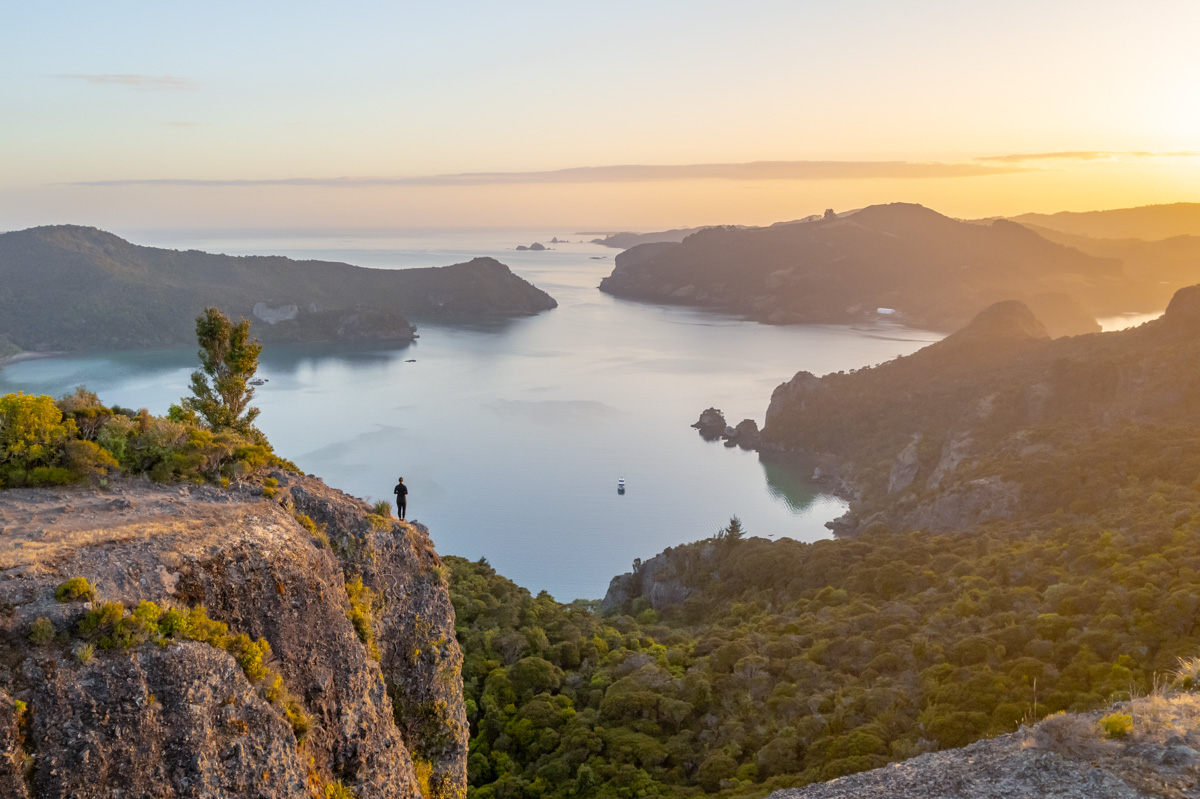
New Zealand’s trails don’t mess around when it comes to weather. You can start a hike in blazing sunshine and end up in sideways rain an hour later. The UV burns, the wind bites, and if you’re anywhere near Fiordland, it’ll likely rain just to keep things interesting. This might be an over exaggeration, depending on what time of year you visit but ultimately, this is why layering your hiking outfits for NZ trails isn’t just smart – it’s essential.
Think of it as your on-trail thermostat: add a layer when the chill hits, peel one off when the sun returns. My go-to system always includes three: a base, mid, and outer. Mix and match as the weather shifts, and you’ll be set for anything from coastal tracks to alpine passes.
BASE LAYERS: YOUR SECOND SKIN
Your base layer is the workhorse – it touches your skin, wicks away sweat, and keeps you dry.
Tank or Shelf-Bra Top
A tank or shelf-bra top is my go-to for any type of New Zealand trail. It’s supportive and quick-drying. Just make sure to get one with thicker straps so you don’t suffer with rubbing underneath your pack straps. Great for those who prefer lighter layers. My pick: LSKD sports bra or shelf bra tank.
Short-Sleeve Merino Tee
If you prefer an extra layer over your sports bra, a lightweight, breathable tank or tee is a winner. It’s perfect for those days when you want a bit more warmth but know a long sleeve will come off before you’ve hit the 15 minute mark.
Long-Sleeve Merino Top
If you’re starting early or hiking in cooler conditions, a long-sleeve layer is a must-have in your arsenal of hiking outfits for NZ trails. It doubles as sun protection and bug armour. Bonus tip: thumb loops keep sleeves in place when layering. My pick: This one from Macpac is a favourite.
BOTTOM LAYERS: LEGGINGS, SHORTS & TRAIL PANTS
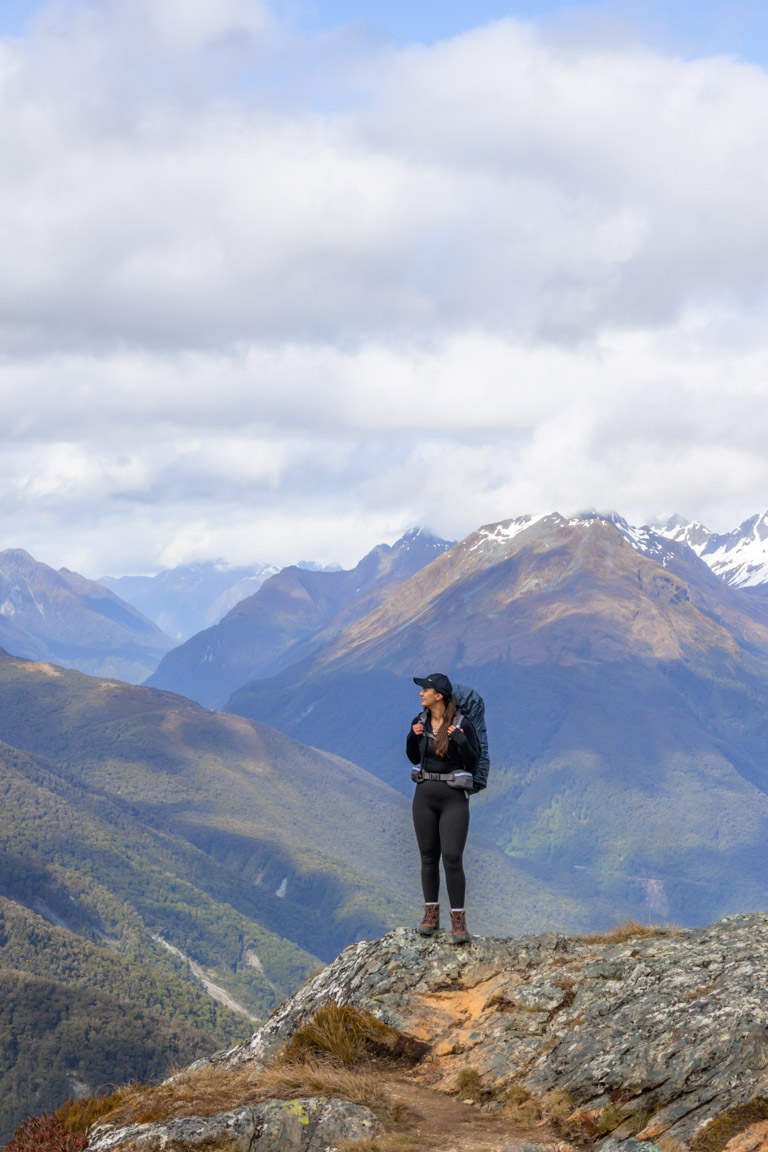
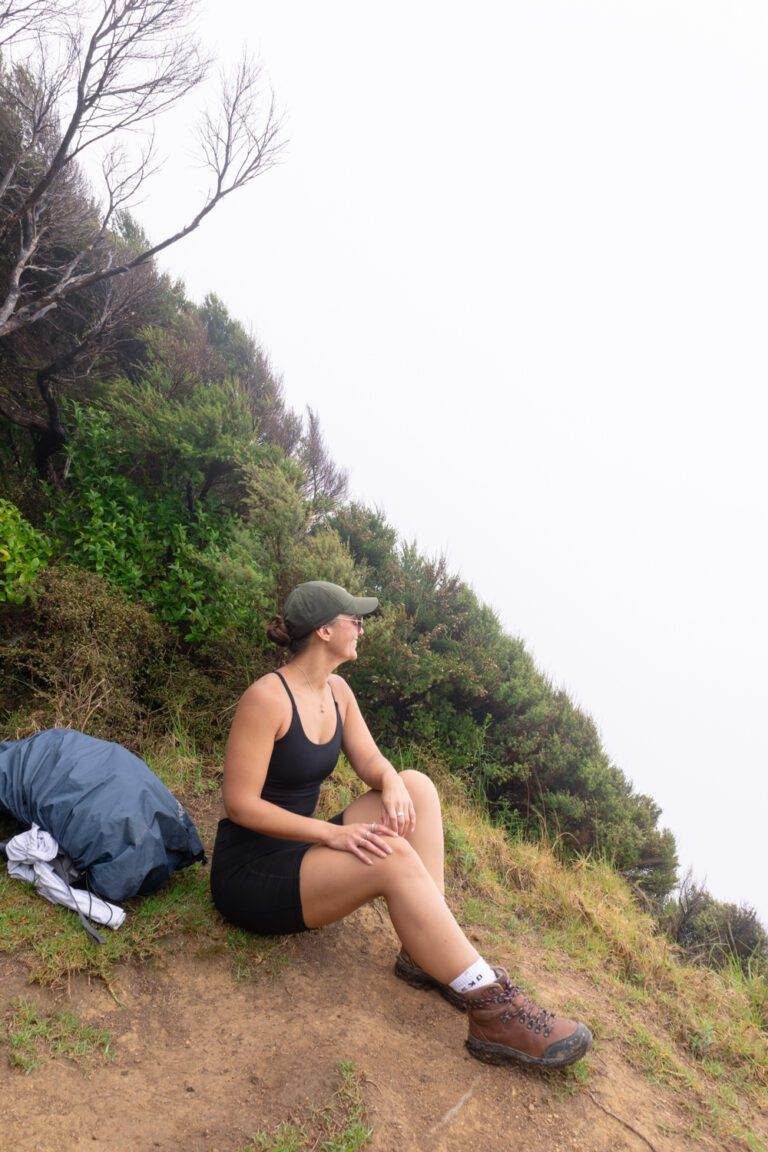
What you wear on your legs can make or break your comfort on the trail. For warm days, bike shorts (the short version of leggings) are perfect – they keep you cool, dry fast, and prevent thigh chafing. On most NZ trails, though, I reach for full-length leggings. They’re flexible, quick-drying, and act like a second skin.
If you’re hiking somewhere with variable conditions, convertible hiking pants are a smart choice – zip the lower section off when it’s hot and back on when it cools down. For rougher terrain or multi-day hikes, lightweight hiking trousers offer great protection from sun, wind, and sandflies without feeling bulky.
MID LAYERS: YOUR WARMTH ENGINE
Your mid layer traps heat without adding bulk, and it’s the difference between a cosy trail break and teeth-chattering misery. The following pieces should definitely be considered when you’re building your hiking outfits for NZ trails.
Puffer Vest
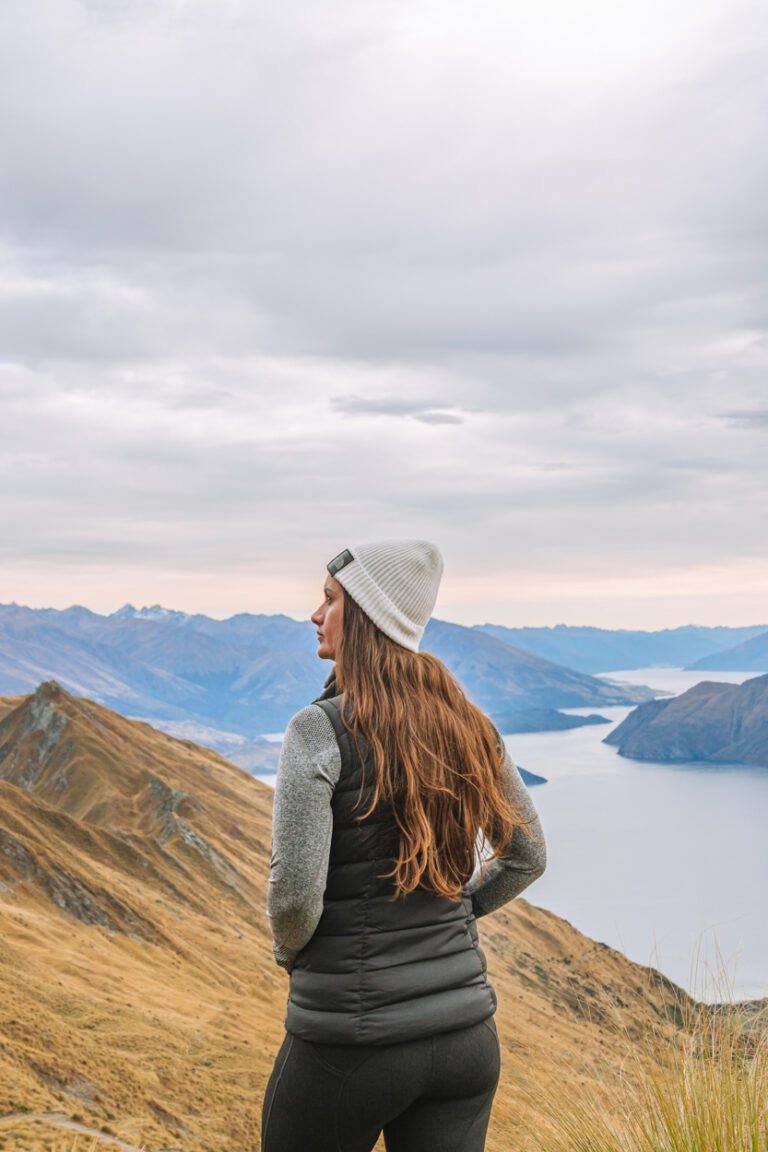
I love a good puffer vest. It warms your core while leaving your arms free to move – perfect for early mornings or surprise cold snaps mid-tramp. Plus, you can stuff it into its own pocket and use it as a makeshift pillow. My pick: This Northface Vest
Full Puffer Jacket
In all honesty, I don’t tend to take a full puffer as I mostly hike in the warmer months but when temperatures drop and you’re facing alpine conditions, a full puffer is a must. Look for a balance of warmth and packability.
Lightweight Fleece
Simple but effective. I tend to have a fleece on hand to keep me warm, mainly in the evenings but it is handy to have just in case you do need an extra layer on the trail.
OTHER POSTS YOU MIGHT LIKE
OUTER LAYERS: YOUR WEATHER SHIELD
This layer is your line of defence against New Zealand’s unpredictable skies. It blocks rain, wind, and everything in between.
Breathable Waterproof Jacket and Wind Breaker
A proper waterproof and windproof jacket is non-negotiable when it comes to packing your hiking outfits for NZ trails. A good Gore-Tex or equivalent shell keeps you dry while letting moisture escape, so you don’t feel like you’re hiking inside a sauna. I have a Gore-Tex Jacket and it’s definitely saved me in the past.
Waterproof Over-Trousers
Not glamorous, but worth their weight when the heavens open or mud turns trails into slip’n slides. They’re also sandfly-proof if you’re stopping for a break. Look for side zips so you can pull them on without removing boots.
FOOT & HEAD EXTRAS: THE FINISHERS
It’s easy to overlook the small things, but socks and headwear can make or break your comfort out there.
Socks
I have a mix of both cotton and merino socks. Both are breathable, fend off blisters, and resist odour. I usually pack one pair per day plus a spare, just in case.
Sun Hat or Beanie
NZ’s UV is brutal, so a sun hat is essential for summer hikes. In winter or alpine areas, swap it out for a warm beanie. On multi-day trips, I usually bring both – because you never know.
Buff or Neck Gaiter
A buff is an absolute necessity on multi-day hikes. It blocks sun, wind, sandflies, and can double as a headband.

WHEN TO STACK WHAT
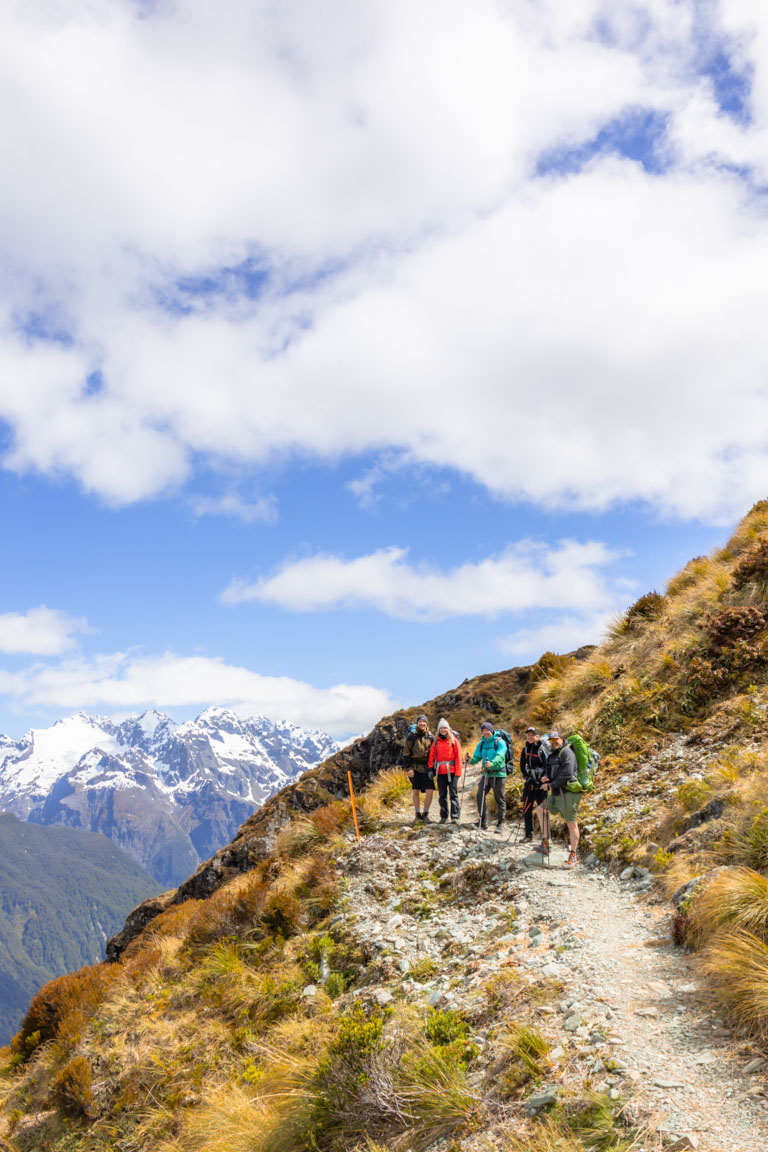
If you’re new to layering or just like to keep things simple, here’s an easy rule of thumb for NZ trails:
Trail Type | Base Layer | Mid Layer | Outer Layer |
Hot Day Hike | Tank or sports bra | T-shirt (if needed) | Lightweight windbreaker or waterproof jacket in your pack |
Chilly Morning Start | Tank or sports bra with short or long-sleeve merino top | Puffer vest | Lightweight windbreaker or waterproof jacket in your pack |
Rainy Overnight Trip | Tank or sports bra with short or long-sleeve merino top | Puffer vest | Waterproof jacket and over-trousers |
Multi-Day Epic | Rotate between sport bras, tanks, short and long sleeve tops | Puffer vest/jacket | Waterproof jacket and over-trousers |
FABRIC 101: 15 SECOND CHEAT
Merino: Warm, breathable, and somehow still fresh after days of wear.
Synthetic (like Polypropylene): Quick-drying, affordable (brand dependant), and light.
Gore-Tex: The ultimate balance between breathability and waterproofing.

SUMMARY
In this post, we’ve unpacked the best layers for hiking outfits for NZ trails — from base layers that wick away sweat to outer shells that battle wind, rain, and everything in between. You’ve now got the full breakdown of how to layer smart, stay comfortable, and adapt to NZ’s famously unpredictable weather.
Whether you’re tackling an alpine pass, a coastal walk, or a multi-day Great Walk, the right gear can make all the difference. I hope this guide helps you feel confident, prepared, and ready to hit the trails in comfort.
What’s your go-to hiking outfit for NZ conditions? Drop your combo in the comments below — I’d love to hear what works for you.
Planning your next Aotearoa adventure? You’ll find plenty more ideas in my New Zealand hiking guides and New Zealand travel posts. Or, if you’re dreaming beyond NZ, explore my worldwide travel guides for more outdoor inspiration.
LIKE THIS POST? PIN IT HERE
FAQs
What’s the best base layer for sweaty NZ summer hikes?
Go for lightweight and moisture-wicking. This is for fast drying and to stop chafing.
Can I wear cotton on NZ trails?
Definitely but I would advise a fabric that is more breathable.
How many base layers for a 4-day Great Walk?
One for every day. And make sure to include at least one long-sleeve.
Do I need a puffer jacket in summer?
Skip the full jacket. A packable vest covers 90% of cold snaps and saves weight but this also completely depends on where you are hiking.
Are leggings enough for sandflies?
Sometimes. To ensure you don’t get bitten add permethrin spray but make sure to follow safety measures when applying.
Waterproof jacket or soft-shell for day hikes?
Pack a lightweight Gore-Tex shell. Soft-shell works on dry windy days only.
How do I stop pack-strap rub on my sports bra?
Choose wide, padded straps or layer a seamless merino tee underneath.
Best budget merino brands in NZ?
Mountain Warehouse, Kathmandu, Macpac. There are also plenty of brands that have outlet stores like Icebreaker and Mons Royale.
Can I layer a fleece under a puffer?
Yes. Fleece breathes, puffer insulates.
What socks stop blisters on multi-day tramps?
Merino, that comes above your boots. Just make sure to change daily and wear your boots in prior.
Top Travel Resources to Plan Your Next Trip
Finding the Best Flights
Skyscanner: A great platform for comparing flight prices across airlines and routes.
Omio: Perfect for comparing not just flights but also trains and buses, especially for European travel.
Booking Your Stay
Hostelworld: Ideal for those specifically looking to budget on their travels and seeking hostels, guesthouses, or shared accommodations.
Booking.com: With a massive selection of hotels, apartments, and unique stays, this platform additionally has deals for frequent travellers.
Trivago: A powerful search engine for comparing hotel prices across multiple booking sites to find the best deals for your stay.
Renting a Car
Europcar: Offers a wide range of vehicles for hire in New Zealand and worldwide, perfect for exploring at your own pace.
AVIS: A trusted car rental service with a variety of vehicles and locations, ideal for seamless travel adventures.
Travel Essentials & Gear
Amazon.com: Your one-stop shop for travel gear, gadgets, packing essentials, and last-minute trip must-haves.
Discovering Amazing Activities
GetYourGuide: My go-to for booking tours, tickets, and activities in New Zealand and worldwide.
Everything New Zealand: A must for anyone traveling to New Zealand. This platform offers a curated selection of tours, activities, and adventures to make your Kiwi trip epic.
G Adventures: For small-group tours with a focus on sustainable and authentic travel, G Adventures is unbeatable.
Capturing Your Memories
MILK Books: Create stunning photo books to preserve your travel memories. Expect high-quality prints and customisable designs.
These links are affiliate links. If you book through them, I earn a small commission at no extra cost to you. Your support helps me keep sharing guides like this. Thanks for helping fuel the next adventure!
LATEST FROM THE BLOG
OTHER PINS YOU MIGHT LIKE
A SNAPSHOT OF HIKING OUTFITS FOR NZ TRAILS
Core System: Base (wicks sweat) + mid (heat) + outer (blocks weather). Mix any combo for instant comfort.
Base Essentials: LSKD shelf-bra tank / short-sleeve merino tee / long-sleeve merino.
Leg Options: Bike shorts / full leggings / zip-off pants (versatile).
Mid Essentials: Puffer vest (core warmth) / lightweight fleece (core warmth) / full puffer jacket (alpine nights).
Outer Essentials: Gore-Tex waterproof jacket (non-negotiable) / over-trousers with side zips (mud + rain).
Foot & Head: Merino socks (1 pair/day + spare) / buff (sun, wind, bugs) / sun hat and beanie.
When to Stack:
- Hot Day Hike: Tank + windbreaker in pack.
- Chilly Start: Long-sleeve + vest.
- Rainy Overnight: Merino top + full waterproofs.
- Multi-Day Epic: Rotate 2–3 bases + puffer + Gore-Tex.
Fabric Winners: Merino (odour-free) / synthetics (quick-dry) / Gore-Tex (breathable waterproof).
Pro Tip: Treat merino with permethrin; pack layers in dry bags; start cold, peel as you go.