When you think of Whitehaven Beach, you probably picture swirling turquoise water under a blazing Queensland sun, but what if you visit Whitehaven Beach in winter?
When I visited the Whitsundays in July, I was ready for those dreamy postcard blues. Reality check? The skies were overcast, and the beach almost empty. But here’s the twist – it was still absolutely stunning, just in a completely different way.
In this post, I’ll share what Whitehaven Beach is really like in winter. This way, you’ll know exactly what to expect and whether it’s worth adding to your Whitsundays itinerary.
This post may contain affiliate links. Your purchase through these links supports me with a commission, at no added expense to you.
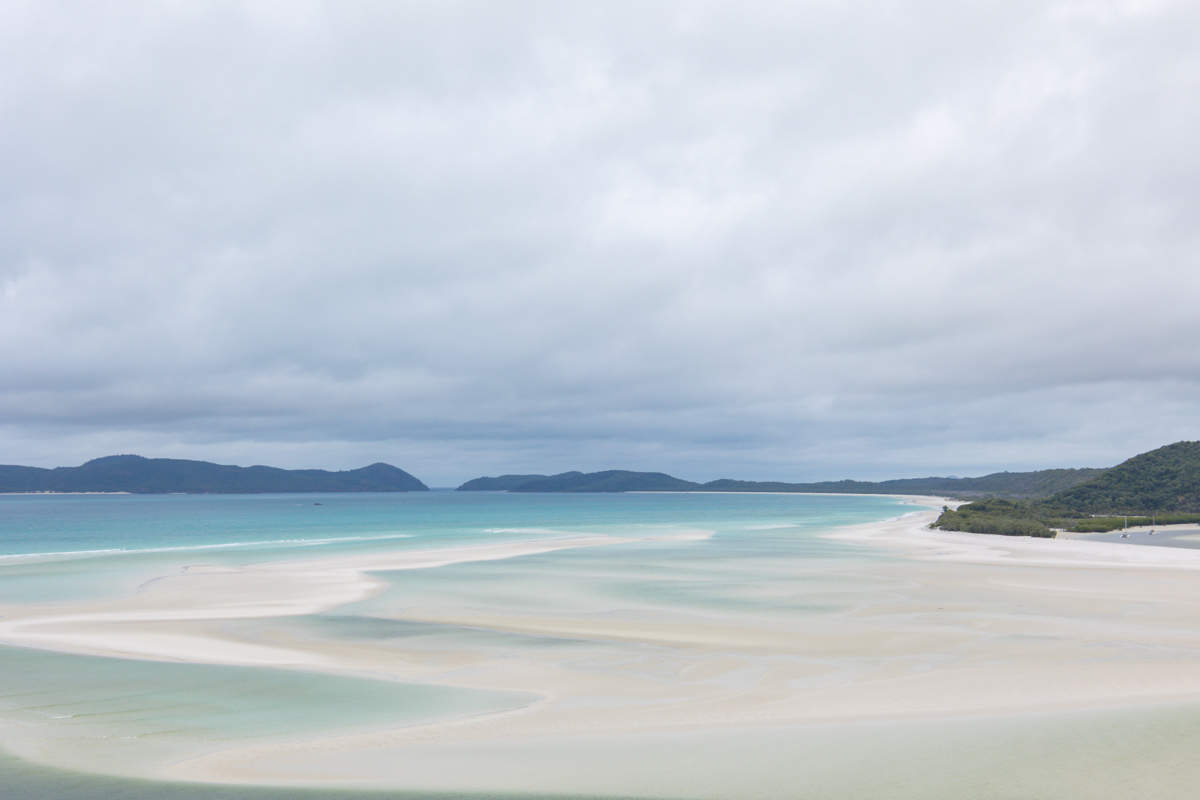
WHERE IS WHITEHAVEN BEACH?
Whitehaven Beach sits on Whitsunday Island, the largest of the 74 Whitsunday Islands off the coast of Queensland, Australia.
It’s part of the Great Barrier Reef Marine Park, and thanks to strict protection, it’s remained one of Australia’s most pristine beaches. You’ll find it about a 40 minute boat ride from Hamilton Island or an hour and a half from Airlie Beach.
WHAT MAKES WHITEHAVEN BEACH SPECIAL?
What sets Whitehaven apart from every other Australian beach is more than just its looks – though yes, it absolutely delivers in that department. The sand here isn’t normal. It’s made up of 98% pure silica, which gives it that near-blinding white glow and a powdery texture that feels more like soft clay than sand. Even better, it doesn’t retain heat, so you can walk barefoot in the middle of the day without doing the hot-foot dance.
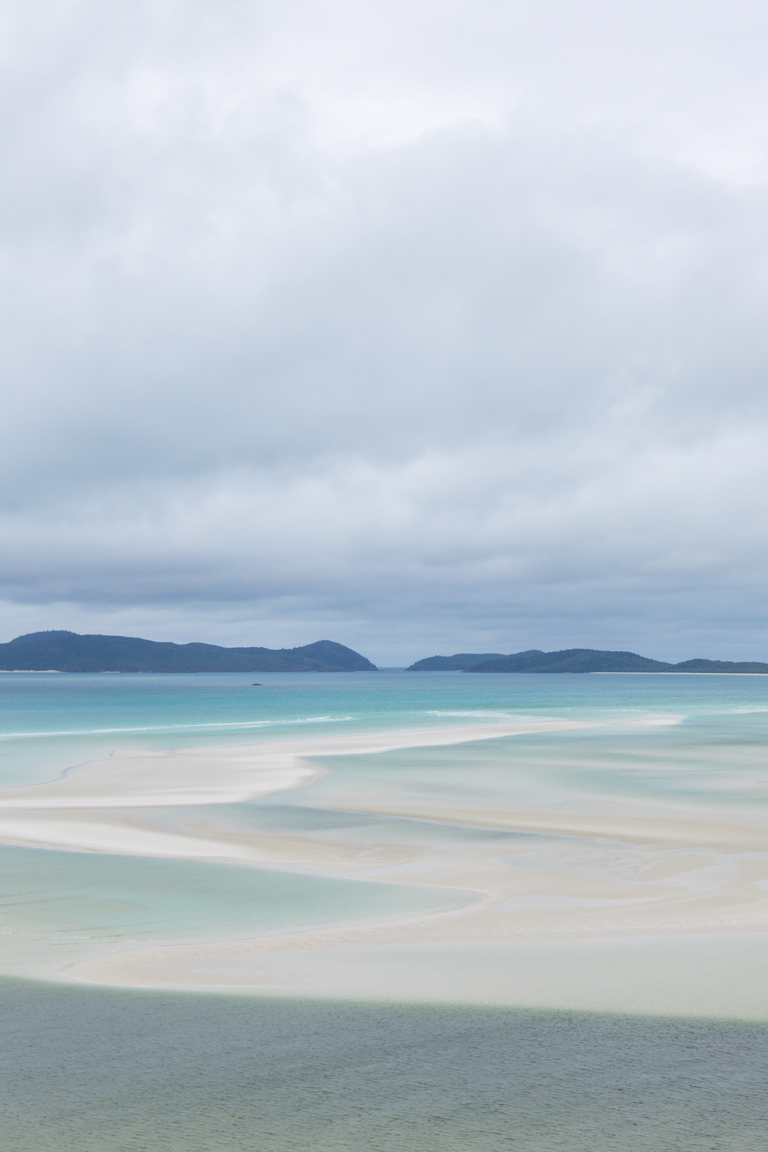
Add to that the swirling patterns of turquoise water at Hill Inlet – best viewed from the lookout after a short walk inland and you’ve got one of the most iconic scenes in Queensland. But what really seals it? There’s nothing else here. No cafes, no shops, no buildings. Just untouched coastline that feels a world away from everything else.

VISITING WHITEHAVEN BEACH IN WINTER
So, what’s it actually like visiting Whitehaven Beach in winter? Honestly, it’s a bit of a wild card. Winter in Queensland (June to August) is technically the dry season. Temperatures tend to hover between 22 and 25°C and much lower humidity than summer. Some days greet you with brilliant blue skies; others serve up moody clouds. Either way, the weather feels mild and comfortable, especially if you’re used to colder climates. The water stays swimmable too and actually in our experience, warmer than being outside, especially if the breeze is up.
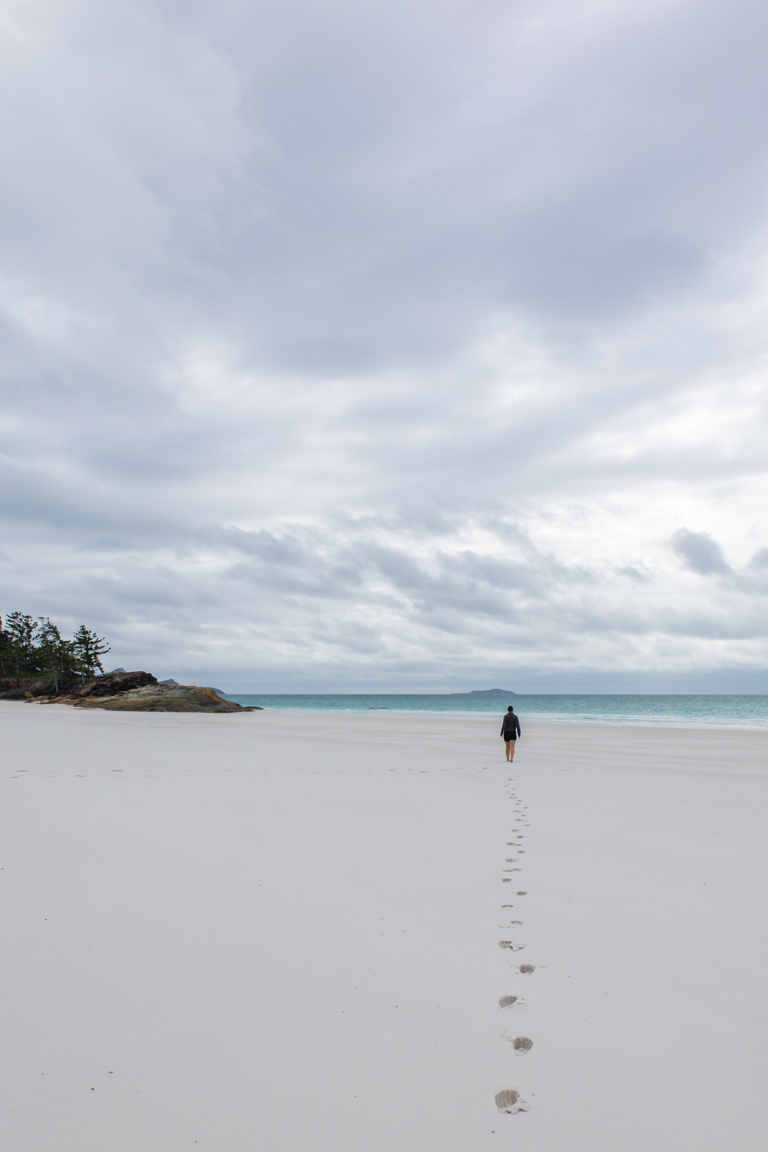
What really stands out is the lack of crowds. On my winter visit, we shared a massive stretch of that famous silica sand with just a handful of others. It felt calm, remote, and a bit surreal for one of Australia’s most iconic beaches. Sure, you might not get those postcard-perfect turquoise hues every day, but what you do get is an entirely different vibe. It’s quieter, and surprisingly photogenic in a way that doesn’t rely on sunshine to impress.
HOW TO GET TO WHITEHAVEN BEACH
From Airlie Beach:
- High-speed boat tours (half or full day) are the most common. These often include snorkelling stops around the Whitsunday Islands.
- Multi-day sailing trips anchor near Whitehaven overnight – this is the option we opted for, and honestly, highly recommend.
- Scenic flights are also available for those keen to photograph Hill Inlet from above.
From Hamilton Island:
- The quickest option. It will take around 30-45 minutes by boat. If you’re short on time or want maximum beach hours, Hamilton Island is your best launch point.

HOW CROWDED IS IT IN WINTER?
If you’re someone who flinches at the thought of towel-to-towel crowds, winter is the sweet spot. During the colder months, Whitehaven Beach sees a noticeable dip in visitor numbers compared to the summer rush. On my visit, we had long stretches of sand to ourselves, with only a handful of people around. That said, it’s worth noting that winter is also whale season, which can draw a few extra visitors, especially on good-weather days so it’s not completely deserted.
Boats still come and go during the day, especially around Hill Inlet, but it’s much calmer and more spacious. If you’re hoping for peace, space, and uninterrupted views, winter is absolutely the time to go.
I’d also highly suggest arriving earlier in the day, especially if you want to enjoy the beach before the bulk of the boats arrive. Morning light tends to be softer for photos, and you’ll have a better chance of soaking up that quiet, more private feel. If you’re booking a tour, look for one that departs early – it’s the easiest way to stay one step ahead of the crowds.
THE EASY WALK TO HILL INLET LOOKOUT
If like us, you arrive on the northern side of Whitehaven Beach near Tongue Bay, don’t worry, it’s easy enough to get to Hill Inlet Lookouts and Whitehaven Beach.
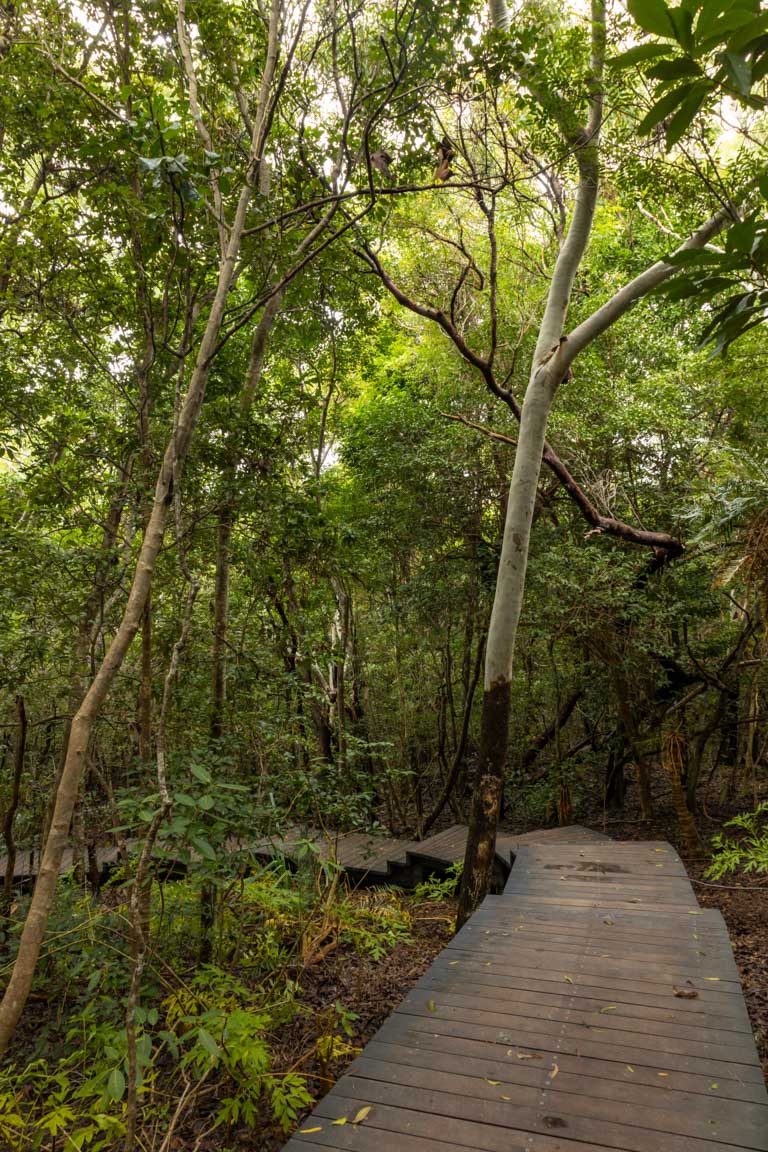
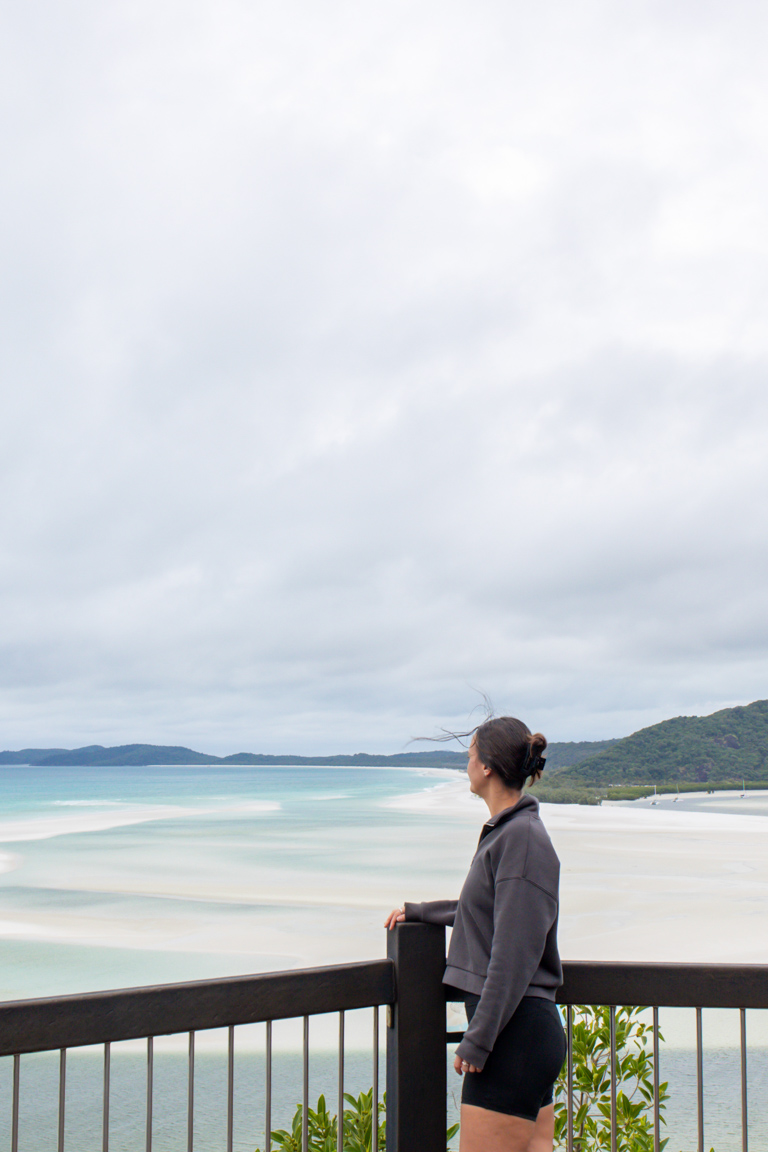
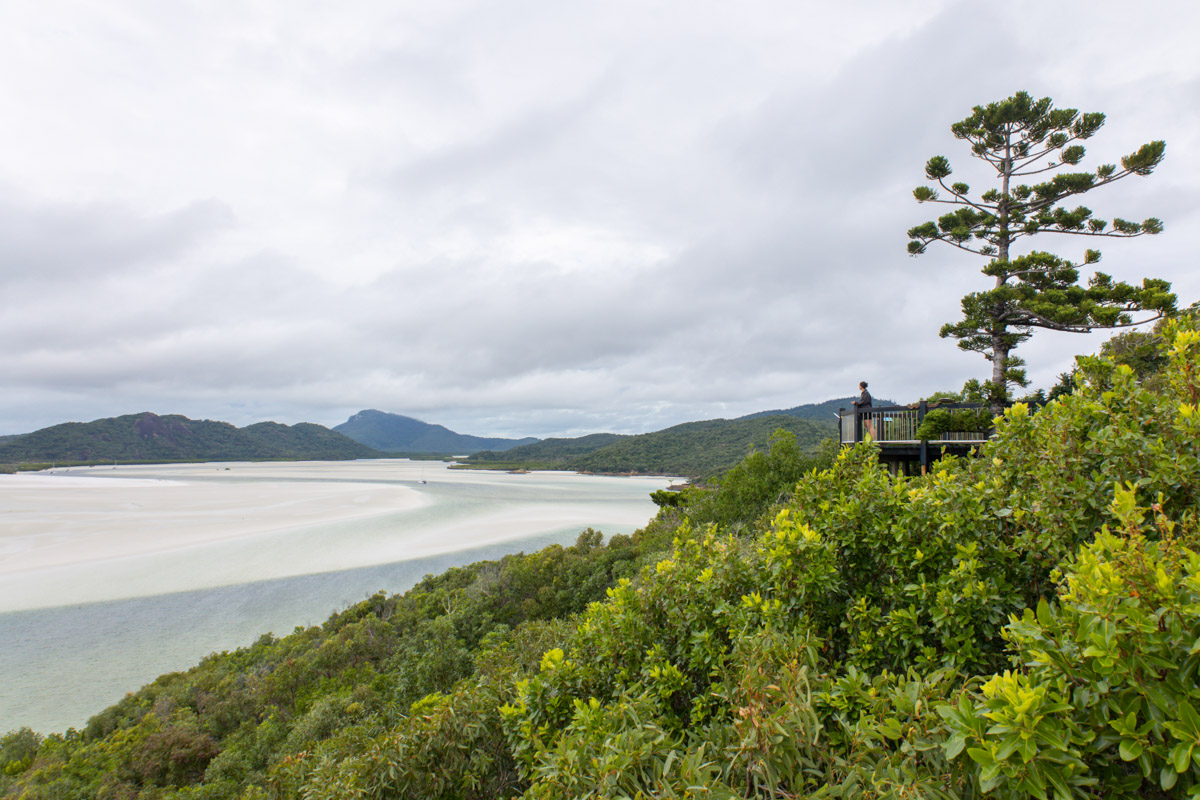
The trail takes around 15 minutes each way and follows a well-maintained path through lush forest, with a mix of boardwalks and gentle steps. It’s suitable for most fitness levels, and once you reach the top, you’re rewarded with one of the most iconic views in the Whitsundays. From here you’ll see swirling silica sand meet turquoise water in a sweeping panorama. Even under grey winter skies, the scene is pretty spectacular. For more information check it out on AllTrails here.

IS IT SAFE TO TRAVEL SOLO?
Yes, Whitehaven Beach is an easy and safe place to explore solo, especially as part of a day tour. The Whitsundays region caters well to independent travellers, and most tours are group-based with guides, so you’ll rarely feel isolated. The short walks, well-maintained tracks, and clear signage make it simple to navigate.
As always, it pays to follow basic solo travel common sense – stay on the marked paths, don’t swim alone, and keep an eye on the departure times. But overall? Whitehaven is one of those solo travel gems where you can feel remote without being alone.
PHOTOGRAPHING WHITEHAVEN BEACH IN WINTER
Aside from the crowds there is one other positive to visiting Whitehaven Beach in winter and this is especially true for photography. Winter brings softer light which is perfect for capturing the landscape without fighting blown highlights or extreme contrast.
If you’re capturing the walk to the lookout, you will also be going from shaded forest into open, sweeping views. This requires a little more light control in camera so make sure you’re aware of your settings if operating in manual.
My suggestion would be to not shy away from those dramatic winter skies either. As you’ve probably noticed in the images on this post, the moodier clouds don’t diminish the classic white and aqua palette. This still shines through – proof that Whitehaven doesn’t need perfect weather to show off.
If your tour gives you enough time on the beach, take full advantage. Conditions can shift quickly in the Whitsundays, and you might just luck into a few pockets of blue sky breaking through the clouds. And if you’re up for a bit of exploring, make time to visit Betty’s Beach. This is a lesser-known gem tucked away nearby. It’s peaceful, photogenic, and absolutely worth tracking down.


SO, IS WHITEHAVEN BEACH WORTH VISITING IN WINTER?
Short answer? Absolutely.
Visiting Whitehaven Beach in winter may mean that you might not get the intense turquoise you see on Queensland Tourism billboards. But who knows, you might luck out too and have a perfect winter day. Regardless, winter feels less like a tourist hotspot and more like a remote stretch of coastline you’ve somehow lucked into having almost to yourself. Moody skies, softer light, no crowds. It may not be the classic Whitsundays experience, but that’s exactly what makes it worth it.
SUMMARY
In this post, we explored Whitehaven Beach in winter – from what you can expect to photography tips. If you’re planning your Whitsundays itinerary and want to know the reality behind the brochures, I hope this helps you plan with confidence.
Whitehaven Beach in winter might not be the beach holiday you envisioned. However, it will give you something better – fewer people, cooler temps, and a completely different version of this iconic spot.
For more grounded photography guides, honest travel insights, and landscapes worth hauling your camera for, feel free to explore our comprehensive travel guides here. And if New Zealand’s winter beaches are calling, all my favourite ultimate NZ destinations are right here.