Sailing Whitsundays is a four-day excuse to do very little except snorkel, explore hidden bays, and soak in some of Australia’s most iconic views. Seeing it all from the boat makes you feel like you’ve accidentally stepped into a postcard, no matter the season.
In June, I joined Whitsunday Sailing Adventures for a trip on the Whitsunday Blue. It was part relaxation, part adventure, and 100% the kind of trip where you forget what day it is by day two. If you’re visiting the Whitsundays in any capacity, even in winter when the weather can be unpredictable, the highlights are unforgettable.
Below is everything you need to know about experiencing Whitsundays from the deck of a sailing yacht.
This post may contain affiliate links. Your purchase through these links supports me with a commission, at no added expense to you
WHITSUNDAYS LOCATION
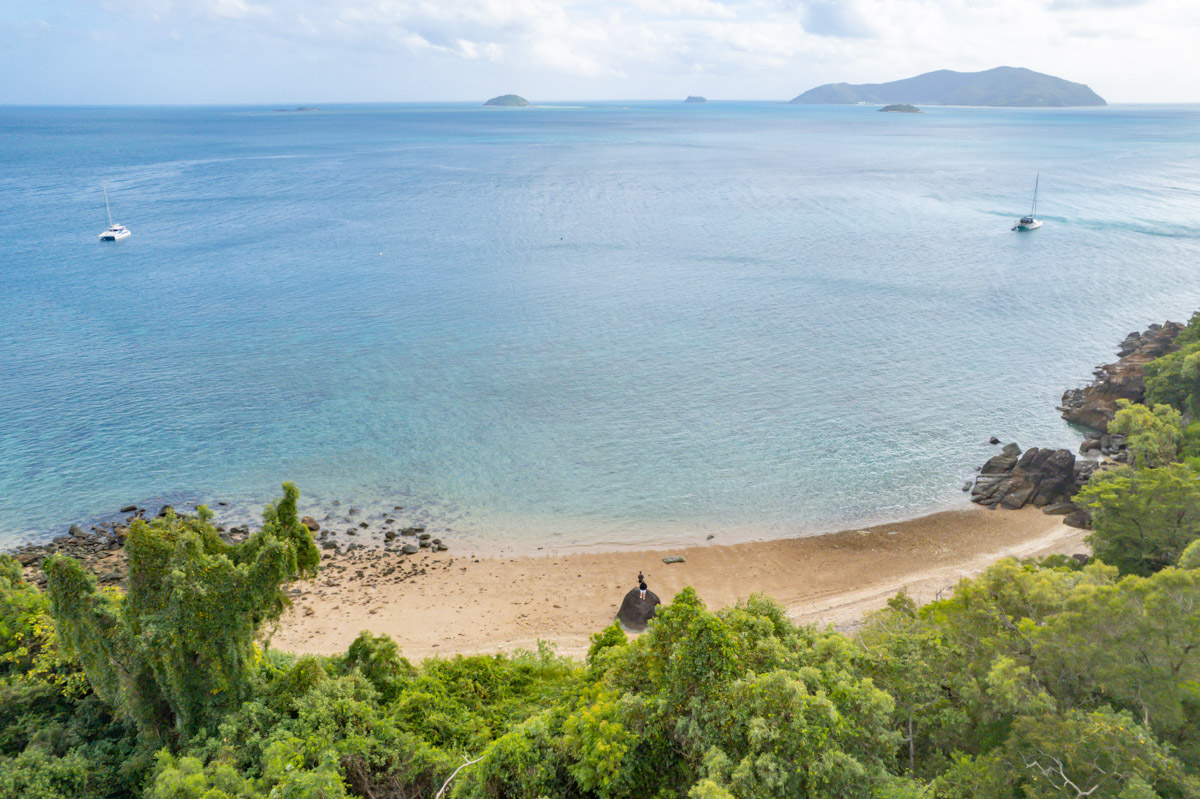
The Whitsundays are a cluster of 74 tropical islands off Queensland’s central coast, right in the heart of the Great Barrier Reef. The region is known for its turquoise water, fringing reefs, and pristine beaches. Whitehaven Beach being the poster child.
Most of the islands are uninhabited, protected as part of the Great Barrier Reef Marine Park, and best explored by boat. Airlie Beach on the mainland acts as the main departure point for sailing Whitsundays trips, while Hamilton Island, Hayman Island and Daydream Island offer resort-style stays if you’re more leaning towards a land base.
HOW TO GET TO THE WHITSUNDAYS
There are a few ways of getting to the Whitsundays. As mentioned above it’s normal to depart from Airlie Beach so if you’re flying in, the two nearest airports are:
- Whitsunday Coast Airport (Proserpine) — About a 30-minute drive from Airlie Beach, with regular flights from Brisbane, Sydney, and Melbourne.
- Hamilton Island Airport — Ideal if you’re staying on Hamilton Island before your sail, with direct flights from Brisbane, Sydney, and Melbourne.
From Proserpine Airport, shuttle buses and private transfers run directly to Airlie Beach. We booked ours online the day before through Airlie Beach Private Transfers and Tours. They arrived on time and made pick up and drop off super easy. However, if you’re coming from Hamilton Island, ferries connect to Airlie Beach several times a day.
If you’re already travelling in Queensland, Airlie Beach is also accessible by bus or car via the Bruce Highway.


BEST TIME TO SAIL WHITSUNDAYS
We sailed in winter which is Queensland’s dry season and typically means mild, sunny days and cooler evenings. Daytime temperatures sit around 22–25°C, humidity is low, and the water stays warm enough for swimming. The big bonus of traveling during this time? Fewer crowds. Even at popular spots like Whitehaven Beach, if paired with an early start it can mean sharing the sand with just a handful of people.
Another perk? Winter is also whale season so make sure to keep an eye out during your sails. Our group spotted humpbacks breaching once, though they were far in the distance. Unfortunately, being seasick at the time, I didn’t experience it at all. Ahh, the realities of travel.
Travelling in winter does come with its downfalls as we had a mixture of weather across the four days of sailing. While we did get some sun, rain and wind were also present. Thankfully, most of the inlets we anchored in blocked the majority of the wind, but this meant the sea was often warmer than being exposed to the elements.
In terms of the best time to go, late winter and early spring are the best months for sailing Whitsundays – specifically September and October. These months offer consistently sunny weather, low humidity, and light winds, making for excellent sailing conditions. Additionally, it’s just outside the peak tourist season, so you’ll enjoy a more relaxed experience.

PLANNING YOUR SAIL
When searching for our ideal sailing Whitsundays itinerary, we prioritised a company with stellar reviews, a few days to immerse ourselves in everything the Whitsundays has to offer without feeling rushed, and a smaller group size. Being in our 30s, we weren’t looking for a party boat. Don’t get me wrong, I enjoy a glass of wine (or two), but for us, this trip was more about relaxation and exploration.
If you also have specific preference, this usually means that you will be selecting a certain boat when searching, one that suits all of your requirements. We chose the Whitsunday Blue through Whitsunday Sailing Adventures, a catamaran that comfortably fits eight people plus two crew. It has a dingy for trips to and from islands, provides all meals, and includes a comfortable cabin with our own ensuite (which we selected for a small additional fee). There was also plenty of space upper deck for lounging, eating and mingling.
A key tip: pack light. A small soft bag is all you need and likely all you’ll be able to bring onboard. The items I found most essential were swimmers/togs, a couple of warm layers for cooler evenings and sunscreen. If sailing for four days, expect some clothes to get wet, so also include some easy-to-change outfits. Snorkelling gear, wetsuits, and towels were all provided, though I brought a small travel towel just in case.
Also, if sailing Whitsundays is part of a larger trip and you’re travelling with extra luggage, no worries – there’s a handy storage option in Airlie Beach. With that sorted, all that’s left is to step onboard, settle in, and get ready to explore the islands.


LIFE ONBOARD
Sailing Whitsunday onboard the Whitsundays Blue was pretty relaxed. Our skipper and second-in-command wore many hats: chef, deckhand, guide, and problem-solver rolled into one. The itinerary stayed flexible, with the crew adjusting routes to suit weather and conditions, but they were always open to requests and tried their best to make them happen. At each anchorage, we had time to explore at our own will. Life onboard was filled easily with sunbathing, paddle boarding, exploring tucked-away beaches, and of course, snorkelling. The reefs and marine life here are spectacular, so you can definitely spend plenty of time in the water.
In terms of what to expect in the cabins – they are compact but surprisingly comfortable. We chose one with an ensuite, which made it feel more private. On the Whitsunday Blue, the aft cabins (at the back of the boat) even feature a glass viewing panel, so you can peak straight into the water beneath you. It’s a small touch that I’d recommend vying for, if you can.
Meals were freshly prepared onboard and far exceeded expectations – think salmon dinners, pancake breakfasts, and snacks in between. We never went hungry, and it always felt indulgent after a day of being on the water.
Our second day brought the longest stretch of sailing, with hours of open ocean rolling by. The long sails are something to be prepared for, especially if you’re known for getting seasick. Ginger and anti-nausea tablets are a must.
And for those who like to stay connected, Starlink was provided onboard. It was fast and reliable, making it easy to get in touch or scroll social media.
In the evenings, things slowed right down. Stargazing from the deck, swapping stories, or simply listening to the water lap against the hull was the perfect way to end each day.


IS SAILING THE WHITSUNDAYS SAFE FOR SOLO TRAVELLERS
Absolutely. While my experience wasn’t solo, sailing in the Whitsundays naturally lends itself to meeting people. Since most activities take place on the boat, you’ll share the experience with other travellers unless you book a fully private charter, whether for a day trip or a multi-day sail.
The snorkel stops, island walks, and lazy stretches on deck all carry a relaxed, social vibe. It’s easy to strike up a conversation, yet never feels forced. Perfect if you want company without the awkward icebreakers. At the same time, you’re able to a certain extent, create your itinerary to have enough freedom to do your own thing. With plenty of stops and downtime, you can dip in and out of the group as much as you like, making it ideal for solo travellers who value both independence and connection.
OUR 4 DAYS SAILING WHITSUNDAYS ITINERARY
Sailing Whitsundays is all about a mix of snorkelling stops, island walks, and long stretches under sail. Our four-day itinerary, which I’ve given a brief outline of below, gave us a taste of it all:
Day 1: Depart Airlie Beach, sail through Whitsundays Passage to Hook Passage for our first night at anchor.
Day 2: Morning sail to Tongue Bay, walk to Whitehaven Beach, then a big sail to Manta Ray Bay for snorkelling. Quick stops at Luncheon Bay and Butterfly Bay before anchoring for night two.
Day 3: Snorkel at Cockatoo Point, explore Langford Island’s lookout and swim with turtles, then sail to Baird Point for the night.
Day 4: A final sail down Hook Island and across the Whitsunday Passage back to Airlie Beach, arriving by midday.


PHOTOGRAPHING SAILING THE WHITSUNDAYS
One of the best parts about sailing the Whitsundays for several days was the variety it offered for photography. The scenery changed hourly – from turquoise waters to dramatic headlands, secret inlets, and the famous Whitehaven Beach under shifting, moody skies. Just as quickly, so did the light. It easily shifted from overcast skies sailing on the catamaran to blazing sunshine in a sheltered bay. My camera settings barely got a rest.
Even with grey skies and bursts of rain, the Whitsundays never stopped being photogenic. The shifting weather only added more chances to capture different atmospheres — calm, wild, and everything in between. A good camera can do some justice to the landscapes, but as we all know, seeing it in person is always better.
A few lessons I learned (and in some cases, wished I’d known sooner):
- Bring a GoPro or underwater housing. We forgot ours, and it hurt – thankfully, we were able to see what others captured by bringing theirs along.
- Protect your gear. Salt spray gets everywhere. A dry bag or rain cover will save you a lot of grief. My favourite cover for my camera is this shell from Peak Design.
- Plan for power. Extra batteries or a power bank are essential since charging on board at a certain voltage can be limited. The same goes for laptops, which drain far more power than a phone.
- Pack versatile lenses. A wide angle captures those sweeping Whitsunday bays, while a zoom lens helps when spotting dolphins or whales.
- Bring your drone. I’m not the most confident flyer for launching and landing on a moving boat, but when I finally launched mine on the last day, I captured some of my favourite shots of the trip.
Whether it’s above water, under it, or high overhead, photographing the these islands offers endless variety for you to capture. The landscapes and seascapes change by the hour, so you’ll return with a gallery of unique images from just a few days sailing Whitsundays.

SUMMARY
In this post, we’ve covered everything you need to know to plan and enjoy sailing Whitsundays. From the best time to go and getting there, to choosing the right boat and itinerary, and tips for life onboard and photography.
Whether you’re sailing with friends, solo, or just chasing turquoise waters, hidden bays, and unforgettable sunsets, this trip delivers.
If this post helped you plan, or inspired you to step onboard, it’s done its job. For more travel guides, photography tips, and adventure inspiration, check out my comprehensive travel guides. Or if you’re dreaming further afield, explore my ultimate New Zealand destinations to fuel your wanderlust.
Top Travel Resources to Plan Your Next Trip
Finding the Best Flights
Skyscanner: A great platform for comparing flight prices across airlines and routes.
Omio: Perfect for comparing not just flights but also trains and buses, especially for European travel.
Booking Your Stay
Hostelworld: Ideal for budget travellers seeking hostels, guesthouses, or shared accommodations.
Booking.com: With a massive selection of hotels, apartments, and unique stays, this platform often has deals for frequent travellers.
Discovering Amazing Activities
GetYourGuide: My go-to for booking tours, tickets, and activities worldwide.
Everything New Zealand: A must for anyone traveling to New Zealand. This platform offers a curated selection of tours, activities, and adventures to make your Kiwi trip epic.
G Adventures: For small-group tours with a focus on sustainable and authentic travel, G Adventures is unbeatable.
Capturing Your Memories
MILK Books: Create stunning photo books to preserve your travel memories. Expect high-quality prints and customisable designs.
These links are affiliate links. If you book through them, I earn a small commission at no extra cost to you. Your support helps me keep sharing guides like this. Thanks for helping fuel the next adventure!